
Each year at International Law Weekend, the American Branch honors members and others in the international law community who have demonstrated exceptional service to the Branch and individuals who have greatly contributed to the field of international law.
Awards
ABILA Outstanding Achievement Award
The ABILA Outstanding Achievement Award was established to recognize outstanding contributions in the field of international law. Such contributions might include, but are not limited to, service to an international organization, a State, or an international court or tribunal; or to teaching, research, or scholarship in the field of international law. While candidates are reviewed comprehensively, factors considered may include consideration of an individual’s specific extraordinary service initiatives and/or sustained superior contributions to the field of international law over a number of years, as well as visionary and innovative leadership.
Nominations for the award are accepted each spring, with a July 1 submission deadline. Recipients of this annual award need not be current members of the American Branch.
2026 Recipient: Judge Silvia Fernández de Gurmendi
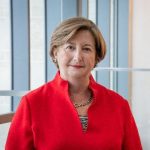
Judge Silvia Alejandra Fernández de Gurmendi is a leading figure in international justice, humanitarian law, and human rights, and the first woman to serve as president of the International Criminal Court (ICC). She played a central role in the creation of the ICC and has worked tirelessly to see that those who commit war crimes and crimes against humanity are held accountable for their actions. Before joining the ICC, Judge Fernández was director general for human rights at the Ministry of Foreign Affairs of Argentina. She also represented Argentina before other human-rights bodies and advised on transitional-justice issues related to the prevention of genocide and other international crimes. Judge Fernández was a professor of international criminal law at the University of Buenos Aires and a visiting professor at American University’s Washington College of Law’s Academy on Human Rights and Humanitarian Law.
2025 Recipient: Brenda Hollis
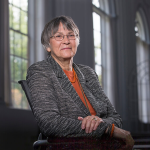
Brenda Hollis was the Principal Trial Lawyer (D-1 level) in the Office of the Prosecutor at the International Criminal Court, in which capacity she led the investigation into possible international crimes committed in Ukraine, reporting directly to the ICC Prosecutor. Prior to assuming her duties with the ICC OTP, Ms. Hollis served as the International Co-Prosecutor of the Extraordinary Chambers in the Courts of Cambodia from July 2019 until July 2022, having been the Reserve International Co-Prosecutor from April 2015. Prior to her appointment as the ECCC’s International Co-Prosecutor, she was the Prosecutor of both the Residual Special Court for Sierra Leone and the Special Court for Sierra Leone (2010–2019). After serving as a legal consultant to the SCSL Prosecutor in 2002, 2003 and 2006, in February 2007 she became lead prosecutor in the case against former Liberian President Charles Taylor and continued to lead the prosecution of that case until the appeal was concluded in 2013.
2024 Recipient: The Honorable Charles N. Brower
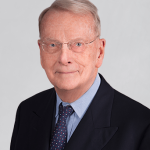
Hon. Charles N. Brower’s 55-year career in the law has combined extensive practice at the bar with distinguished public service, both national and international. For nearly 40 years, he has focused on public international law and international dispute resolution. As counsel or arbitrator, he has handled cases on all six continents, principally under the rules of the ICC, UNCITRAL, LCIA, AAA, United Nations Compensation Commission, ICSID, Stockholm Chamber of Commerce, Insurance and Reinsurance Arbitration Society, and LMAA. These cases have involved a wide variety of commercial disputes as well as issues of public international law, particularly in the oil and gas sector, major infrastructure projects, expropriations, and other investment disputes, including those arising under both bilateral and multilateral investment treaties. He has served continuously since 1983 as a judge of the Iran-United States Claims Tribunal in The Hague, The Netherlands. That service was interrupted for some months in 1987 by White House service as Deputy Special Counsellor to President Reagan. Brower resumed partnership in White & Case LLP from 1988 until joining 20 Essex Street in 2001. Since 2014, he has also served as a Judge ad hoc at the International Court of Justice.
Past Recipients
2023 Recipient: Navanethem (Navi) Pillay
Navanethem Pillay served as UN High Commissioner for Human Rights from 2008 to 2014. She is currently serving as Judge Ad Hoc of the International Court of Justice in the Application of the Convention on the Prevention and Punishment of the Crime of Genocide (The Gambia v Myanmar). She is also the President of the International Commission Against the Death Penalty based in Madrid, the President of the Advisory Council of the International Nuremberg Principles Academy and the Chair of the Quasi-Judicial Inquiry into Detention in the Democratic People’s Republic of Korea. In 1995, after the end of apartheid, Pillay was appointed acting judge on the South African High Court, and in the same year was elected by the UN General Assembly to be judge on the International Criminal Tribunal for Rwanda, where she served a total of eight years (1999-2003), the last four as President. In 2003, she was appointed as a judge on the International Criminal Court in The Hague, where she served on the Appeals Chamber until 2008. Ms Pillay was the first woman to start a law practice in her home province of Natal in 1967 and acted as a defence lawyer for anti-apartheid activists, exposing torture, and helping establish rights for prisoners on Robben Island.
2022 Recipient: H.E. Justice Richard Goldstone
H.E. Justice Richard Goldstone served as prosecutor of the International Criminal Tribunal for the former Yugoslavia and the International Criminal Tribunal for Rwanda between 1994 and 1996. Prior to serving as Prosecutor, he had chaired what became known as the Goldstone Commission, an independent judicial commission that investigated individuals and activities that posed a threat to the restoration of civil rights during the transition to post-apartheid South Africa. Mr. Goldstone served as justice of the Constitutional Court of South Africa from 1995 to 2003. Since his retirement, Mr. Goldstone has engaged in numerous activities related to the rule of law and human rights. In 1999, he chaired the Independent International Commission on Kosovo, established by the Swedish Prime Minister, Goran Persson. He recently chaired the Independent Expert Review established in December 2019 by the Assembly of States Parties to review the International Criminal Court and Rome Statute system. Watch Mr. Goldstone’s Keynote Address accepting this award at International Law Weekend 2022 here.
2021 Recipient: Fatou Bensouda
On 12 December 2011, Ms Fatou Bensouda of The Gambia was elected by consensus Prosecutor of the International Criminal Court by the Assembly of States Parties. Ms Bensouda was sworn in on 15 June 2012. Ms Bensouda had previously held the position of ICC Deputy Prosecutor (Prosecutions), having been elected with an overwhelming majority by the Assembly of States Parties on 8 August 2004 and serving as such until May 2012. Prior to her work at the International Criminal Court, Ms Bensouda worked as Legal Adviser and Trial Attorney at the International Criminal Tribunal for Rwanda (ICTR) in Arusha, Tanzania, rising to the position of Senior Legal Advisor and Head of The Legal Advisory Unit. Ms Bensouda also took part in negotiations on the treaty of the Economic Community of West African States (ECOWAS), the West African Parliament and the ECOWAS Tribunal. She has served as delegate to United Nations conferences on crime prevention, the Organization of African Unity’s Ministerial Meetings on Human Rights, and as delegate of The Gambia to the meetings of the Preparatory Commission for the International Criminal Court. Watch Ms. Bensouda’s Keynote Address accepting this award at International Law Weekend 2021 here.
Charles Siegal Distinguished Service Award
The Charles Siegal Distinguished Service Award was established by the ABILA Board of Directors in 2020 to recognize outstanding contributions to the Branch by a member of the ABILA. Contributions may include service to the ABILA Board, ABILA Committees, and/or the ABILA’s International Law Weekend. In choosing the recipient, the Selection Committee may consider an individual’s specific extraordinary service initiatives and/or sustained superior contributions to the ABILA over a number of years.
Solicitations for nominations for the award are sent to ABILA members each spring, with a July 1 submission deadline.
2026 Recipient: Leila Nadya Sadat

For the past ten years, Leila Nadya Sadat has served as ABILA’s President-Elect, President, and Chair of the Board; served as Co-Director of Studies; and served as Chair of the International Criminal Court Committee and the Study Group on the Crimes Against Humanity Treaty. She has served as a panelist at numerous International Law Weekends, including a regional one, and has organized ABILA’s 100th-anniversary conference and video. She provides invaluable advice to officers of the Branch and the ILW Organizing Committee, and has been a successful fundraiser for the Organization, with its surplus increasing dramatically under her leadership. She has consistently striven to encourage young professionals and students to join the Branch and actively participate, for example through the “Student Ambassadors” program. ABILA’s professional reputation, influence, financial standing, and commitment to enhancing and defending—in the face of unprecedented challenges—the rule of law in international relations have grown exponentially under Leila’s leadership. And that leadership at all times has exhibited fairness, respect and friendship to all of our members—a distinguishing feature of a true leader dedicated to service.
2025 Recipient: Houston Putnam Lowry

Houston Putnam Lowry is ABILA’s longstanding Treasurer with over 20 years of experience with the American Branch. Since becoming our incredibly consistent Treasurer, Houston has transformed the organization’s financial present and future. He is a key feature at every ABILA event, always happy to help and provide a smile. Houston has taken on various roles with ABILA, including serving as the first Webmaster, Chair of the International Commercial Law Committee, and ABILA Secretary. Outside of his work with the ABILA, Houston is a Partner with Ford & Paulekas, LLP in Connecticut and has worked on projects at the American Law Institute since 1989. Through this honor, we acknowledge Houston Putnam Lowry’s outstanding and generous dedication to the efforts and achievements of ABILA over many years, for which he fully deserves our gratitude, esteem, and sincere respect.
2024 Recipient: Philip Moremen

Professor Philip Moremen is an Associate Professor and Department Chair at Seton Hall University’s School of Diplomacy and International Relations. He is a long-time devoted member of the ABILA, currently serving as Honorary Vice-President. For the past 24 years, Professor Moremen has been an active member of ABILA’s Executive Committee, now its Board of Directors. He has also overseen the Branch Proceedings for several years. Professor Moreman chaired the Formation of Customary International Law Committee. As a member of the Branch’s Centennial Committee, Phil played a leading role in helping ABILA organize a series of meaningful events and programs for the Centennial year. Of particular note was his distinguished service as Director of Studies for several years, during which he exhibited wise leadership, collegiality, and counsel. He has worked diligently with students, encouraging their interest in international law and participation in the ABILA’s work. Finally, his thoughtful and quiet leadership style has been an incredible and memorable gift to the Branch. Through this award, we recognize Professor Moremen’s exemplary and selfless contributions to the work and success of the ABILA over many years, for which he more than merits our appreciation, respect, and deep admiration.
Past Recipients
2023 Recipients: Ved Nanda and John Noyes
Ved Nanda was the Distinguished University Professor and Thompson G. Marsh Professor of Law at the University of Denver, where he founded the International Legal Studies Program in 1972 and directs the Nanda Center for International and Comparative Law. A world-renowned international law scholar and human rights advocate, he set the standard for promoting the interests of our student members with the greatest good cheer, energy, wisdom, and enthusiasm, encouraging their active engagement in the activities of the Branch. The American Branch recognizes him for his decades of active service in and invaluable contributions to the Branch, including as a member of the Executive Committee, as an Honorary Vice-President, as a David Dudley Field Patron, and for organizing and participating in numerous panels at many International Law Weekends and regional International Law Weekends as well as through his active participation in committees of the International Law Association.
John Noyes is the Roger J. Traynor Professor of Law Emeritus at California Western School of Law, San Diego, CA. An Honorary Vice President of the American Branch since 2014, he served as President (2008-10), chaired the Executive Committee (2010-2014), and held many other offices, including Editor of the Branch Proceedings and active member of numerous Branch Committees. He has demonstrated extraordinary commitment, leadership, and organizational skills. A patron since 2008, John oversaw the challenging transformation of the Branch from a voluntary association to an incorporated not-for-profit (1995-2004). He has represented the Branch wisely and effectively at the International Law Association, including on its Executive Council and (among others) the ILA committees on Baselines under the International Law of the Sea, Legal Issues of the Outer Continental Shelf, and Coastal State Jurisdiction Relating to Marine Pollution. The American Branch acknowledges and thanks him for his wise leadership, thoughtful counsel, and dedicated service to our Branch over many years.
2022 Recipient: David P. Stewart
David P. Stewart has been a longstanding leader in the American Branch. He has served as an ABILA Executive Committee member, Vice-President, President-Elect (2012-2014), President (2014-2018), and Chair of the Board of Directors (2018-2022). Prior to his term as President, he took on many presidential duties, including the Branch Newsletter. During his tenure as President, he organized several conferences, including the inaugural International Law Weekend–South, and served as a key member of the organizing group for the 76th International Law Association Conference in Washington, D.C. in 2014. Professor Stewart represented the American Branch on ILA committees, including the International Protection of Consumers Committee and the Committee on Protection of Privacy in Private International and Procedural Law. He also led several American Branch committees, including as Co-Chair of the Extraterritorial Jurisdiction Committee and Co-Chair of the Commercial Dispute Resolution Committee.
2021 Recipient: James ‘Jim’ Nafziger
James “Jim” Nafziger has contributed to both the International Law Association and the American Branch over a 40-year span. In the American Branch, he chaired the Human Rights Committee; served as Director of Studies, Vice President, and President; initiated, during his tenure as President, regional International Law Weekends and greatly expanded Branch membership; and promoted cooperation with other international law organizations. For over 25 years with the International Law Association, he served as Rapporteur and then Chair of the Cultural Heritage Law Committee, which produced valuable studies and two draft conventions. He was named to the ILA’s Executive Council in 2000, representing the American Branch there for 16 years before his elevation to the office of Vice-Chair of the Council – one of a very small number of ABILA members ever to have been so honored. Professor Nafziger truly appreciates, and has worked diligently to further, the roles of the ILA and the Branch in preparing committee studies that develop and advance international law and in staging educational and networking events, such as International Law Weekend, regional ILWs, and ILA conferences. He has strengthened the ILA and the Branch on numerous fronts and has been a valuable mentor and resource for the current ABILA leadership.
2020 Recipient: Cynthia Lichtenstein
Cynthia Lichtenstein was a longstanding leader of the monetary law and securities-related committees in both the International Law Association and the American Branch. She served as Chair of ABILA’s Committee on Committees (later renamed Director of Studies), and subsequently as ABILA’s President (1986-1992) and then as Chair of the Executive Committee. Professor Lichtenstein has always enhanced ABILA’s interests and visibility in her service to the ILA at the international level as a leader of two ILA committees, a mainstay of countless ILA Executive Council meetings and Biennial Conferences, and ILA Vice Chair (2008-2016). She promoted practitioners’ needs and advocated for their inclusion in ABILA, and has long been a vigorous proponent of active outreach to and involvement of student members as an important goal of the Branch.
ABILA Book Awards
The ABILA Book Awards were established to recognize the best books on international law published by ABILA members. Eligible books must have been published within the calendar year of nomination or the preceding calendar year. The subject matter of the book must fall into the broadly defined category of international law.
The Book Awards Committee is proud to offer four separate awards:
ABILA Book of the Year Award: Awarded each year to the best book published on international law or a topic in international law.
ABILA Practitioners Book Award: Awarded each year to the best book published on a technical topic in international law or on a topic likely to be of particular interest to practitioners of international law.
ABILA New Authors Book Award: Awarded each year to the best first book published on international law or a topic in international law by an author who has not previously published a book on this or any other subject.
ABILA Edited Volume Award: Awarded each year to the best edited volume published on international law or a topic in international law.
Solicitations for nominations for the award are sent to ABILA members each spring with a July 1 deadline for submission.
2026 Recipients:
2026 Book of the Year: Interference in Sovereign Affairs and the Discursive Economy of International Law (Brill, 2025)
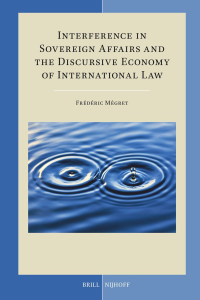
Frédéric Mégret is a Professor of Law and the holder of the Hans & Tamar Oppenheimer Chair in Public International Law at McGill University. About the book: Interference in sovereign affairs is seemingly everywhere but nowhere at the same time. Whether it is pressure on or corruption of public officials, conditionality in development assistance, criticism of one’s human rights record, psychological or propaganda operations, instrumentalization of diasporas, international organization supervision or meddling diplomats, the phenomenon is as amorphous as it is diffuse. But what if it was the lens that we use to capture interference that was the problem? How do the tools we use in international law blind us to the reality of certain phenomena? The urgency of understanding interference on its terms has never been greater, and it requires nothing less than a reimagining of the sort of discursive investments on which international law rests.
2026 Practitioners Book Award: The Oxford Handbook of Women and International Law (OUP, 2026)
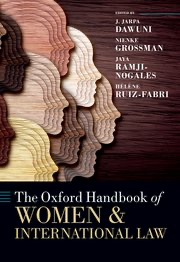
J. Jarpa Dawuni is a Full Professor of Political Science at Howard University, Washington D.C.; Nienke Grossman is a Professor of Law and Co-Director of the Center for International and Comparative Law at the University of Baltimore School of Law; Jaya Ramji-Nogales is the Sheller Family Professor in Public Interest Law at Temple Law School; and Hélène Ruiz Fabri is a Professor at the Sorbonne Law School (University Paris 1-Panthéon Sorbonne). About the book: The Oxford Handbook of Women and International Law interrogates women’s interrelationship with international law’s institutions, norms, and theoretical approaches. Women have made tremendous strides in international law by contributing to its development and application; wielding power as representatives and leaders in international organizations; and serving as judges, legal experts, and leaders of non-governmental organizations pushing the law in new directions. Yet, as this Handbook demonstrates, full equality remains elusive while new threats emerge. Climate change, the rise in nationalism, and anti-gender ideology pose serious challenges to multilateral institutions and norms that protect and empower women.
2026 Best Book by a First-Time Author Award: Indigenous Peoples in the World Bank Group’s Practice – An Inquiry in Light of International Human Rights Law (Springer, 2025)
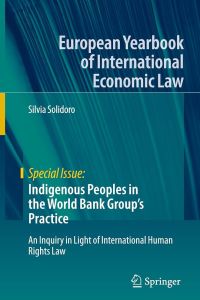
Silvia Solidoro currently holds a Research Fellowship at the Law Faculty of the University of Salento, Lecce, Italy. About the book: This book explores whether the World Bank Group, despite not being formally bound by international human rights law, operates in accordance with it when financing investment projects involving indigenous peoples, who are often among the most impacted. The inquiry proceeds along two principal strands, grounded in the distinction between operations targeting public and private sector recipients. First, it traces the evolution of the World Bank Group’s policies on indigenous peoples, which are binding on its staff and, once incorporated into loan agreements, on financing recipients as well. Second, it examines the interpretative practice of the organization’s Independent Accountability Mechanisms, which review compliance with these policies throughout the project cycle. It finds that the policies have evolved alongside key developments in international law and that the Independent Accountability Mechanisms consistently reference both hard and soft international legal instruments in their assessments.
2026 Best Edited Collection Award: Research Handbook on Third World Approaches to International Law (TWAIL) (Elgar, 2025)
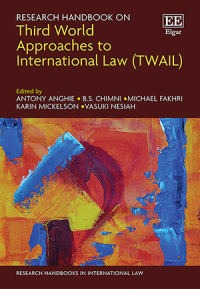
Antony T. Anghie is a Law Professor at the National University of Singapore Faculty of Law and Secretary-General of the Asian Society of International Law; B. S. Chimni is a Distinguished Professor of International Law and Jindal Global Law School; Michael Fakhri is the UN Special Rapporteur on the Right to Food and a Professor of Law at the University of Oregon; Karin Mickelson is Associate Professor Emeritus at the Peter A. Allard School of Law, University of British Columbia; and Vasuki Nesiah is a Professor of Practice, Human Rights and International Law at the Gallatin School, New York University. About the book: This Research Handbook provides a comprehensive overview of Third World Approaches to International Law (TWAIL) with chapters exploring different facets of TWAIL scholarship. It covers major doctrines and topics of international law, as well as TWAIL perspectives on central historical and theoretical debates.
Past Recipients
2025 Book of the Year:
José E. Alvarez and Judith Bauder, Women’s Property Rights Under CEDAW (OUP, 2024). José E. Alvarez is the Herbert and Rose Rubin Professor of International Law at New York University School of Law. Judith Bauder is a Researcher with the European University Institute’s Department of Law in Florence, Italy. This book utilizes the CEDAW Committee’s own texts, including its General Recommendations, Views in response to communications, Concluding Observations in response to State reports, and Reports on Inquiries. The book finds that CEDAW’s vision of what it means for women to have equal property rights is dramatically different from what many scholars consider to be the leading source of “the international law of property,” namely, the case law generated on behalf of foreign investors’ property under the international investment regime.
2025 Practitioners Book Award:
Omri Sender and Michael Wood, Identification of Customary International Law (OUP, 2024). Sir Michael Wood KC is a Barrister with 20 Essex Street Chambers. Omri Sender is a Partner and Chair of the Public International Law Practice Group with S. Horowitz & Co. Customary international law remains a central source of international law and the core of the international legal system. It continues to draw the attention of lawyers, especially at a time marked by the great expansion of international law and its increasing application in domestic and international courts. This book serves as guidance to those seeking to determine the existence of rules of customary international law and their content.
2025 New Authors Book Award:
Erin Pobjie, Prohibited Force: The meaning of “Use of Force” in International Law (CUP, 2024). Prohibited ‘use of force’ under article 2(4) of the UN Charter and customary international law has until now not been clearly defined, despite its central importance in the international legal order and for international peace and security. This book accordingly offers an original framework to identify prohibited uses of force, including those that use emerging technology or take place in newer military domains such as outer space. In doing so, Erin Pobjie explains the emergence of the customary prohibition of the use of force and its relationship with article 2(4) and identifies the elements of a prohibited ‘use of force’.
2025 Edited Volume Award:
Alejandro Chehtman, Alexandra Huneeus, and Sergio Puig, Latin American International Law in the Twenty-First Century (OUP, 2025). Alejandro Chehtman is Dean and Professor of Law, Universidad Torcuato Di Tella, Argentina, and Executive Director of the Latin American Society for International Law. Alexandra Huneeus is Evjue Bascom Professor of Law and Director of the Center for Law, Society and Justice at the University of Wisconsin, Madison. Sergio Puig is Chair in International Economic Law at the European University Institute and Evo DeConcini Professor of Law at UArizona. This collection of essays brings together a group of highly regarded scholars to present a broad survey of Latin America’s approaches and contributions, historically and presently, to the field of international law.
2024 Book of the Year:
Laurence Burgorgue-Larsen for The 3 Regional Human Rights Courts in Context – Justice That Cannot Be Taken for Granted (OUP, 2024). Professor Burgorgue-Larsen is a Professor at the Sorbonne Law School, a Member of the Institut de Recherche en droit international et européen de la Sorbonne, Director of the Studies Group on International Law and Latin American Law, and Director of the Master 2 ‘Human Rights and the European Union.’ The 3 Regional Human Rights Courts in Context: Justice That Cannot Be Taken for Granted is the first book to offer a comprehensive comparison of the three systems. Rather than merely juxtaposing analogous features, the book considers how the three courts operate as parts of a greater, integrated whole. Similarities and differences between the courts are illuminated alongside historical, political, and sociological insights, in addition to the book’s primary legal focus.
2024 Practitioners Book Award:
Sean D. Murphy and Edward T. Swaine for The Law of U.S. Foreign Relations (OUP, 2023). Sean D. Murphy is the Manatt/Ahn Professor of International Law at George Washington University, where he teaches U.S. foreign relations law and international law. Between 1987 and 1998, he served in the Department of State’s Office of the Legal Adviser. Edward T. Swaine is the Charles Kennedy Poe Research Professor at the George Washington University Law School. He previously served as the Counselor on International Law at the State Department. The Law of U.S. Foreign Relations is a comprehensive and incisive discussion of the rules that govern the conduct of U.S. relations with foreign countries and international organizations, and the rules governing how international law applies within the U.S. legal system.
2024 New Authors Book Award:
Patryk I. Labuda for International Criminal Tribunals and Domestic Accountability – In the Court’s Shadow (OUP, 2023). Patryk I. Labuda is an Assistant Professor of international law and international relations at Central European University in Vienna. Previously, he was an Assistant Professor at the University of Amsterdam and has held positions at the Geneva Academy of International Humanitarian Law and Human Rights, NYU School of Law, the University of Zurich, and more. By interrogating how international accountability stakeholders relate to their domestic counterparts, International Criminal Tribunals and Domestic Accountability advocates improvements to ICTs’ institutional design and more dynamic interactions with states to strengthen the enforcement of international criminal law.
2024 Edited Volume Award:
MJ Durkee for States, Firms, and Their Legal Fictions – Attributing Identity and Responsibility to Artificial Entities (CUP, 2024). Professor Durkee is the William Gardiner Hammond Professor of Law at Washington University in St. Louis School of Law. Durkee chairs the International Legal Theory Interest Group of the American Society of International Law and has previously served on the Society’s Executive Committee, among other leadership posts. This volume offers a new point of entry into questions about how the law conceives of states and firms. Because states and firms are fictitious constructs rather than products of evolutionary biology, the law dictates which acts should be attributed to each entity, and by which actors. Those legal decisions construct firms and states by attributing identity and consequences to them. As the volume shows, these legal decisions are often products of path dependence or conceptual metaphors like “personhood” that have expanded beyond their original uses.
2023 Book of the Year:
Frédéric Sourgens for Good Faith in Transnational Law: A Pluralist Account (Brill Nijhoff, 2022). Frédéric Sourgens is the James McCulloch Chair in Energy Law at Tulane University Law School’s Center for Energy Law. The book explains and recasts fragmentation of transnational law and its capture by self-interested corporate actors as something valuable. He argues that for communication across vastly different commercial, economic, social, cultural, and linguistic contexts to remain legally meaningful, different expectations must be translated into a shared transnational discourse.
2023 Practitioners Book Award:
Margaret E. McGuiness and David P. Stewart (eds.) for Research Handbook on Law and Diplomacy (Elgar, 2022). Margaret E. McGuiness is Professor of Law, Director of the LL.M in Transnational Legal Practice Program, and Co-Director of St. John’s Center for International and Comparative Law at St. John’s University School of Law. David P. Stewart is a Professor of Practice, Co-Director of the Global Law Scholars Program, and Director of the Center on Transnational Business and the Law at Georgetown University Law Center. Their book provides insight into the complex, dynamic, and interdependent relationship between international law and diplomacy in the international system. Through analyses of bilateral and multilateral diplomacy in international law-making, interpretation, and adjudication, they assess the roles of lawyers, diplomats, and lawyer-diplomats and their professional conduct.
2023 New Author Award:
Marcela Prieto Rudolphy for The Morality of the Laws of War: War, Law, and Murder (OUP, 2023). Marcela Prieto Rudolphy is an Associate Professor of Law at USC Gould School of Law. Her book provides an assessment of modern ethical thought on killing in wartime and deconstructs the revisionist view of war, which views combatants in an unjust war as innocents and considers their deaths to be murder. She proposes an alternative morality of war and argues that there is moral pressure to improve the laws of war, notably to bring them closer to the ideal where war no longer exists.
2023 Edited Volume Award:
Jeffrey L. Dunoff and Mark A. Pollack for International Legal Theory (CUP, 2022). Jeffrey L. Dunoff is the Laura H. Carnell Professor of Law and Director of the LL.M. in Transnational Law Program at Temple University Beasley School of Law. Mark A. Pollack is Professor of Political Science and Law, Jean Monnet Chair, and Director of Global Studies at Temple University. The volume investigates major developments in international law and explores the core assumptions and concepts, analytical tools, and key challenges of different approaches.
2022 Book of the Year Award:
Tom Ginsburg for Democracies and International Law (CUP, 2021). Tom Ginsburg is the Leo Spitz Distinguished Service Professor of International Law, Ludwig and Hilde Wolf Research Scholar, and Professor of Political Science at the University of Chicago Law School. Democracies and authoritarian regimes approach international law differently, shaped by their distinct forms of government. As the balance of power between democracies and non-democracies shifts, it will have consequences for international legal order. Human rights may face severe challenges in years ahead, but citizens of democratic countries may still benefit from international legal cooperation in other areas. Ranging across several continents, this volume surveys the state of democracy-enhancing international law and provides ideas for a way forward in the face of rising authoritarianism.
2022 Practitioners Book Award:
James A.R. Nafziger for Frontiers of Cultural Heritage Law (Brill Nijhoff, 2021). Jim Nafziger is the Thomas B. Stoel Chairholder, Professor of Law and Director of International Programs at Willamette University College of Law. His book covers emerging topics of cultural heritage law, a relatively new landmark in the field of both national and international law. The primary focus is on the frontiers identified and developed by the work products of the ILA’s Committee on Cultural Heritage Law. The construction of cultural heritage law is a good example of transnationalism at work, combining national initiatives with diplomacy, UNESCO and other intergovernmental agreements, international custom, and non-governmental initiatives such as the ILA committee’s own contributions. This volume concludes by briefly exploring current and future frontiers of a burgeoning range of topics that are central to many people’s daily experiences and interests.
2022 New Author Award:
David Attanasio was awarded for International Investment Protection for Global Banking and Finance: Legal Principles and Arbitral Practice (Wolters Kluwer, 2021), co-authored with Arif Ali. David Attanasio is an Associate at Dechert LLP. This book is a comprehensive guide to international investment protection in the banking and finance sector and provides the first complete discussion of how international investment law applies to investors and investments in the sector. Global banking and finance is a complex and specialized field with sector-specific investment forms, subject to distinctive legal and regulatory frameworks and unique kinds of political risk. This trailblazing book paves the way for the future consolidation of international investment protection as a critical tool for managing the political risk confronting global banking and finance. Featuring expert guidance on the vital legal protections for cross-border finance and banking investments, along with exhaustive and up-to-date coverage of investor-State cases, the book crystallizes a set of field-specific legal principles for the sector.
2021 Book of the Year:
Christian M. De Vos for Complementarity, Catalysts, Compliance: The International Criminal Court in Uganda, Kenya, and the Democratic Republic of Congo (CUP, 2020). The book is about the legitimacy and effectiveness of the International Criminal Court, analyzing its interventions in three “situation countries”: Uganda, Kenya, and the Democratic Republic of Congo. De Vos examines how the Court’s principle of complementarity came to be framed as “a catalyst for compliance” and its unexpected effects on the domestic legal frameworks, institutions, and criminal prosecutions in these three countries. Drawing on ten years of research, he reaches persuasive and useful conclusions about the role complementarity can play in implementing international criminal law.
2020 Book of the Year:
Jennifer Trahan for Existing Legal Limits to Security Council Veto Power in the Face of Atrocity Crimes (CUP, 2020). The book considers, in light of existing obligations of international law, the use of the veto power by permanent members of the U.N. Security Council to block Council Action in situations where there is ongoing genocide, war crimes, or crimes against humanity. Professor Trahan traces a number of such instances, with detailed focus on the crimes in Syria and Darfur — and how vetoes and veto threats, respectively, prevented the Security Council from taking measures it otherwise would have undertaken to try to alleviate the commission of atrocity crimes. She then examines such actions in light of the obligations of international law, specifically, whether such practices accord with (1) the protections due to jus cogens norms; (2) the obligations contained within the U.N. Charter, particularly its “Purposes and Principles,” and (3) the obligations contained within the Genocide and Geneva Conventions. She makes a compelling case that the practice one sees is both far out of line with these existing legal obligations and widely disapproved by U.N. Member States. She suggests this situation is ripe for action in the General Assembly, including the option of requesting the International Court of Justice for an advisory opinion on the legality of such veto use.